

My client’s approach to a more sustainable and financially savvy postpartum
Over the years of working closely with families in their homes during the early postpartum period, I’m given a glimpse into the unique rhythms, systems and values that shape each household.
One of the things I love most about this work is how much I continue to learn from the women I support.
One of my recent clients has particularly inspired me in this way.
She and her partner have approached postpartum with a thoughtful and intentional lens, finding ways to reduce waste, simplify what they bring into their home, and create systems that feel both sustainable and easeful.
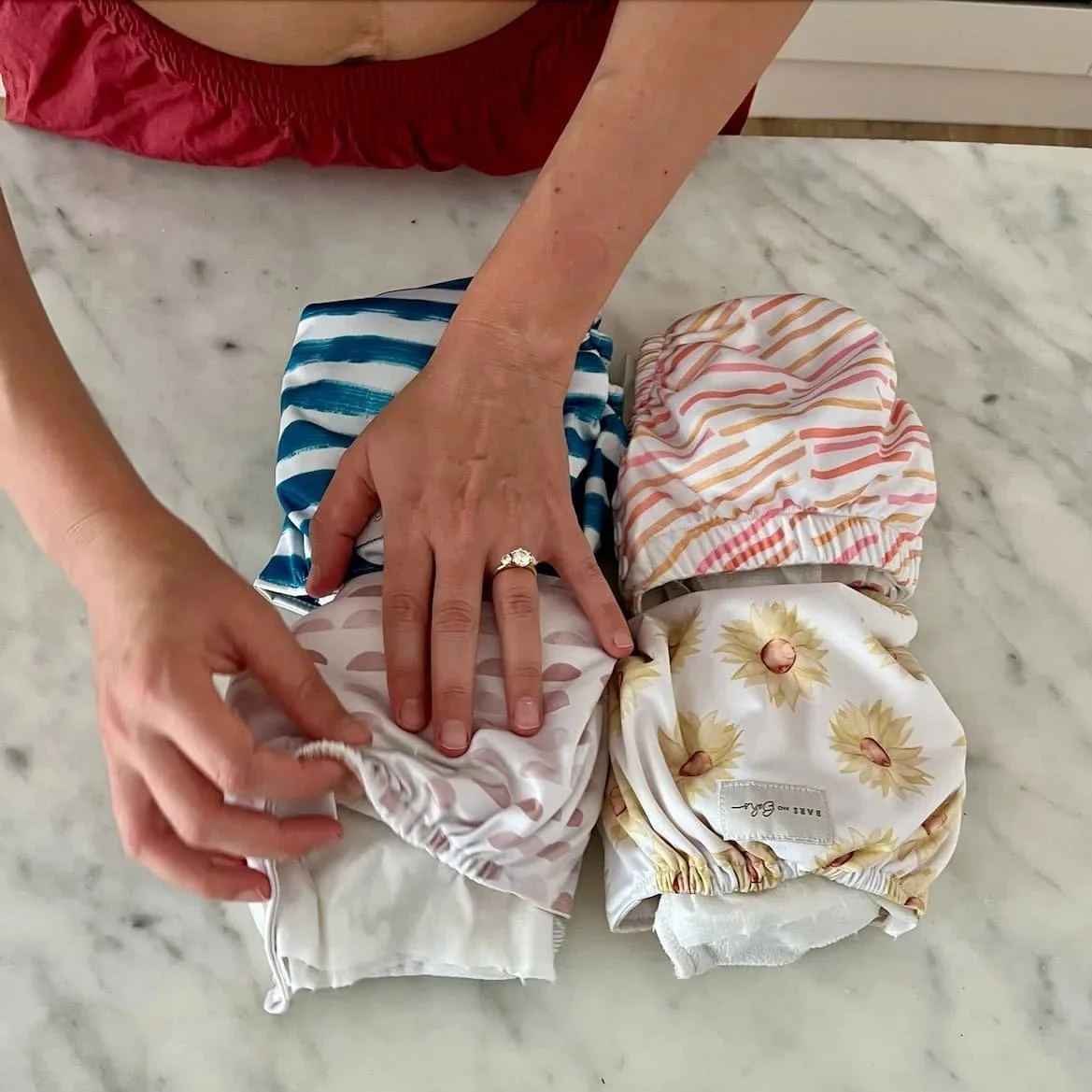
I’ve been especially amazed by how seamlessly they have integrated reusable nappies into the daily rhythm. What can often feel overwhelming at first glance has, in their home, become simple, efficient and second nature.
My client is creative, knowledgeable and always so generous in sharing what she’s learned. Spending time in her space during her fourth trimester has genuinely expanded the way I think about what’s possible in this season.
I’m so grateful she’s put together this piece below to share some of her insights. Thank you Nadia!
“I am reminded that my life is contingent upon the lives of others, without whom I simply would not exist. Water is life, food is life, soil is life - and they become our lives through photosynthesis and respiration. All that we need flows through the land. It is not an empty metaphor that we call her Mother Earth.” - Robin Wall Kimmerer, Serviceberry
Welcoming a newborn presents many firsts and can be an expensive season of life where a lot of waste is produced. It’s also a time that invites fresh foundations to be laid and new habits to form as a family. If you want to start this chapter consciously by treading lightly on the earth, here are a few simple ideas for reducing your family's footprint and saving some money while you’re at it. Bonus if you can put these in place during your third trimester when you’ve got more time up your sleeve to engage.
Gather your nursery on Marketplace
Facebook marketplace is a treasure trove of baby goods; carriers, bouncers, you name it. Babies outgrow items so fast that they’re usually in great condition, and caregivers are often very generous, just happy to get rid of an item and may even throw in another item for free.
Hot tip: List the items you’d like as gifts ahead of your baby shower on a registry and have family and friends do a bank transfer. Then, find the same item on Facebook Marketplace for far less and make your money stretch further.
Reusable nappies
On average, a newborn will generate an astounding 3,000 nappies which is equivalent to 700kg in their first year, all of which are bound for landfill according to the Australian Circular Economy Hub. Investing in reusable nappies like Bare and Boho’s will divert them from going to the tip and are just so much cuter! All it takes is a little prep to set up a reusable nappy system at home to make it easy to go between the change table, laundry and drying rack or dryer.
Babies can be in nappies for around 3 years. Embracing reusables could save you around $8,000, according to the cloth nappy brand Mimi & Co, especially if you pick up a set on Facebook Marketplace and also use reusable wipes. Of course, you’d sanitise them thoroughly before putting your little one in them.
Reusable breast pads and milk storage
Breastfeeding can be a very wet experience and before you know it, you’ve soaked through a whole pack of reusable breastpads, which, like regular menstrual pads, aren’t recyclable. Switch them up for the more absorbent variety, and you’ll be feeling a lot drier and more comfortable. We like Bare Mum’s reusable breast pads.
On the topic of milk, if you intend to collect and store breastmilk it’s worth considering silicone storage bags like Mum Milk’s which are BFA free and a food grade alternative to plastic.
Set up a meal train
The last thing you want from a waste and nutritional perspective is to be eating takeaway on the daily. Have you or a friend set up a meal train before your birth and get people to bring you meals in glass containers to reduce waste and microplastics leaching into your food.
Stock up on tinned goods
Rather than buying plastic which is very hard to recycle, stock up on tinned goods like chickpeas, tomatoes, lentils and butter beans which are all sold in aluminium and are also protein rich basics that will keep you nourished during postpartum. Aluminium is much easier to recycle than plastic, despite the yellow bin and ‘PET’ recycling symbol.
Store bulk whole foods in glass
Find your local bulk wholefoods store like Scoop or The Source and gather a bunch of glass containers to store shelf stable basics like oats, chia seeds, cacao nibs, rice and lentils. Get enough of each for the first few weeks postpartum so you're not rushing to the store and piercing your newborn bubble. Storing food in glass reduces you and your precious newborn's intake of microplastics, too.
By Nadia Surtees
For some families, these ideas will feel aligned and accessible. For others, this chapter may simply be about getting through the early days in whatever way feels manageable.
What this offers is a reminder that even in a time that can feel overwhelming, small choices can make a meaningful difference, both for your family and for the world your baby is growing into.
Perhaps it’s not about doing everything, but about choosing one or two things that feel doable for you. And letting that be enough.
Looking for postpartum support?
If you’re seeking hands-on and emotional support in your fourth trimester, I offer in-home postpartum doula care in Sydney. Download my Packages & Pricing Guide to learn more about how I can walk alongside your family in these early weeks.